The right wheelchair trailer or hitch carrier makes transporting mobility devices safer, simpler, and more versatile. This guide highlights five consumer-tested options that fit standard 2″ hitch receivers and offer robust load capacities, ramps for easy loading, and stability features. Each product is evaluated for ease of use, durability, and value, helping American shoppers decide which carrier best fits their vehicle and lifestyle.
| Product | Brand | Key Strengths |
|---|---|---|
| Goplus Mobility Scooter Carrier | Goplus | Folding carrier, 500 lbs, includes ramp, stabilizer |
| Mockins 40″x40″x4″ Carrier With Ramp | Mockins | Heavy-duty steel, 500 lbs, four restraint options |
| Goplus Aluminum Carrier 50″x29.5″ | Goplus | Lightweight aluminum, 500 lbs, long ramp |
| IRONMAX Aluminum Carrier 50”x29.5” | Generic/IRONMAX | Durable aluminum with steel bottom, 500 lbs |
| IRONMAX Hitch Carrier With Ramp | Generic/IRONMAX | Heavy-duty steel with ramp, anti-tilt |
Goplus Mobility Scooter Carrier, 50” x 29.5”
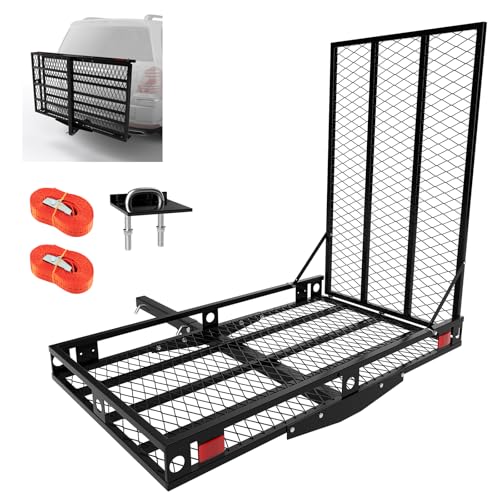
This folding hitch-mounted cargo carrier is designed for 2” x 2” receivers and suits class III or IV hitches. It supports up to 500 lbs, enabling transport of scooters, wheelchairs, and related gear. The carrier’s ramp simplifies loading and unloading, and its foldable design helps with parking when not in use. Built to resist rust with a sturdy metal frame, it combines durability with practical storage features for car trips, weekend getaways, and long-haul transport.
Mockins 40″x40″x4″ Square Carrier With Ramp

The Mockins carrier is a versatile trailer hitch basket with a 500 lb capacity and a 40×40 inch footprint. It includes a 3-position loading ramp (46.5″ long) and a folding design that lays flat for tailgate access or stands upright to save space. A protective rubber edge shields surfaces during loading, and a stabilizer plus hitch pin lock promote anti-rattle performance. It also includes four loop and four ratchet straps to secure cargo during transit, making it a practical choice for transporting bulky mobility equipment or tools.
Goplus Aluminum Cargo Carrier With Ramp, 50″x29.5″
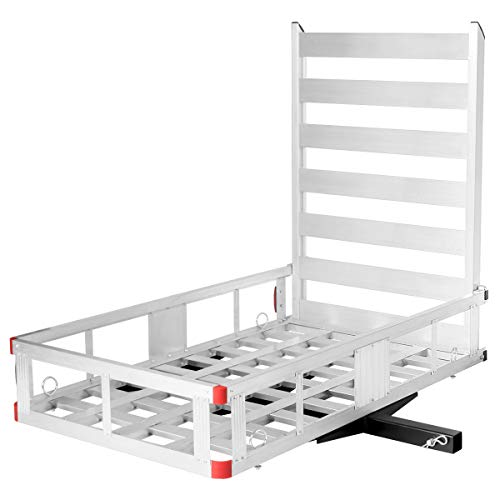
This aluminum carrier balances strength and lightness, supporting up to 500 lbs while weighing only about 40 lbs. Designed for Class III or IV 2″ receivers, it includes a long 41.5″ loading ramp to ease access for scooters, wheelchairs, lawn care equipment, and more. Easy assembly requires minimal tools, and multiple tie-down points along with reflectors on the rear improve security and visibility during travel.
IRONMAX Aluminum Cargo Carrier With Ramp

This 50” x 29.5” aluminum carrier emphasizes durability and corrosion resistance, with a steel bottom support for stability. It supports up to 500 lbs and features a folding ramp for easy loading of wheelchairs, scooters, and other equipment. The design includes multiple tie-down points and reflective rear strips to boost night-time visibility. The carrier’s combination of aluminum and steel components balances weight, strength, and practicality for frequent travel.
IRONMAX Heavy-Duty Hitch Carrier With Ramp

This hitch-mounted carrier combines a sturdy steel frame with a dependable ramp, supporting up to 500 lbs. An anti-tilt device helps reduce cargo movement during transit, while reflective strips enhance visibility behind the vehicle. The design includes locking and securing features to minimize rattling on the road, making it suitable for transporting wheelchairs, scooters, or other bulky gear behind cars, trucks, or SUVs on long trips or daily commutes.
Buying Guide: Key Purchase Considerations
When choosing a wheelchair trailer or hitch carrier, consider the following factors to ensure a fit with your vehicle, mobility needs, and driving style:
- Weight capacity: Verify the carrier’s load rating (commonly 500 lbs). Match this to your wheelchair or scooter weight plus any accessories you plan to carry.
- Hitch compatibility: Most carriers require a standard 2″ receiver, with compatibility for Class III or IV setups. Confirm your vehicle’s hitch type and receiver size.
- Ramp design and length: Longer ramps ease loading but take more space when folded. Check ramp material, non-slip surface, and whether it folds or detaches.
- Security and stability: Look for anti-tilt devices, stabilizers, and locking mechanisms. Built-in tie-down points and included straps improve cargo safety.
- Durability and materials: Aluminum is lighter and rust-resistant; steel offers ruggedness but may be heavier and prone to corrosion without coating.
- Ease of assembly and maintenance: Consider how many parts must be assembled, tools required, and how simple it is to clean and inspect the carrier.
- Vehicle impact and clearance: Ensure the carrier’s dimensions and tailgate clearance won’t obstruct the vehicle’s operation or exhaust heat shielding.
- Storage and parking: Foldable designs save space; assess how the carrier stores when not in use and whether it requires a dedicated area inside a garage or trunk space.
- Cost vs. value: Compare the included features (ramps, straps, locks) relative to the carrier’s price to determine long-term value.
For many users, aluminum carriers offer a compelling balance of weight and strength, especially when frequent loading and unloading are expected. Heavy-duty steel options often emphasize maximum stability and durability, suitable for rough road conditions or frequent trips with bulky gear. Regardless of material, ensure the carrier’s setup aligns with your driving habits, vehicle size, and local road conditions to maximize safety and convenience.