Road trips and daily commutes can be interrupted by severe weather or power outages. A reliable weather radio with car-ready features helps you stay informed and prepared on the go. This guide reviews five top options that combine NOAA alerts, multiple power sources, and built-in charging to keep devices powered during emergencies. Each selection is evaluated for portability, alert reliability, charging versatility, and ease of use in a vehicle or campsite.
| Product | Brand | Key Benefit |
|---|---|---|
| RunningSnail Emergency Hand Crank Radio | RunningSnail | Solar, hand crank, 2000mAh power bank |
| FosPower NOAA Emergency Weather Radio A1 | FosPower | 3 power sources, large power bank, SOS flashlight |
| Midland WR120B NOAA Emergency Weather Radio | Midland | Localized programming, 60+ alerts |
| Raynic Weather Radio | Raynic | 5-way power, NOAA alerts, reading lamp |
| iRonsnow Solar Emergency Hand Crank Radio | iRonsnow | 2000mAh charger, SOS & LED, multiple charging modes |
Note: All products reviewed here support AM/FM and NOAA weather alerts, with multiple charging options. When choosing a model for car use, consider alert reliability, ease of operation, and whether the unit can double as a phone charger in emergencies.
RunningSnail Emergency Hand Crank Radio
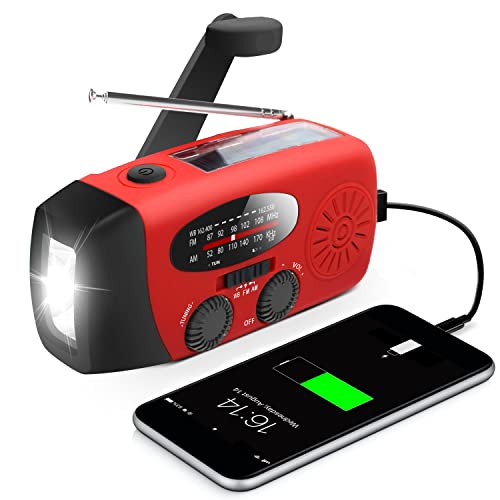
The RunningSnail device combines three power sources: hand crank, solar panel, and a built-in 2000mAh Li-ion battery. This setup makes it suitable for long trips and camping, where access to traditional power can be limited. It features a built-in LED flashlight with a rugged cover and offers a USB charging option for mobile devices, enabling important communications during emergencies. The radio is designed to provide timely emergency weather alerts in your area, helping families stay informed during severe weather events and after power outages.
Key features include a 2000mAh power bank that can charge most USB-powered devices, and a 3-way power system intended to keep the radio running when grid power is unavailable. While solar charging is present, its efficiency is generally lower than that of the battery or hand crank, so users should rely primarily on the other sources in long outages. The rugged construction supports outdoor use in vehicles, campsites, or remote areas.
In terms of car use, the compact size and multiple charging options make it a versatile traveler companion. Its alert capabilities help you monitor weather developments and signs of hazardous conditions along routes. The device supports essential communications in emergencies, enabling calls or text messages when needed.
FosPower NOAA Emergency Weather Radio A1

The FosPower A1 combines a 7400mWh (2000mAh) power bank with multiple charging options to keep devices powered during emergencies. It offers three power sources: hand crank, solar panel, and rechargeable battery, ensuring you can regenerate power in varied scenarios. The device includes two light sources—an LED reading light and a 1W flashlight—providing illumination for dark environments. Its portable design makes it practical for car use when you’re traveling or camping.
For vehicle use, the multiple charging options are advantageous if you’re away from a power outlet for extended periods. The SOS alarm feature adds an extra layer of safety, enabling signaling if you require assistance. While the solar charging is useful, it’s typically slower and should not be relied on as the sole power source during a prolonged outage. The built-in power bank supports charging compact devices, which is helpful for staying connected in emergencies.
Overall, FosPower stands out for battery capacity and a straightforward interface, making it a reliable choice for families seeking a dependable NOAA alert radio with practical charging options for road trips and outdoor adventures.
Midland WR120B NOAA Emergency Weather Radio

The Midland WR120B focuses on localized alerting and extensive coverage. It provides S.A.M.E. localized programming, enabling you to receive alerts tailored to your county or region. It supports over 60 weather hazards and emergencies, making it a strong choice for individuals who want precise and relevant alerts. The included color-coded alert indicators help users quickly assess the severity of threats.
With a strong emphasis on locality, the WR120B is well suited to home use and can be mounted in vehicles for quick access. Its alert system is designed to minimize alert fatigue while ensuring critical information is communicated promptly. The device is easy to operate, with clear controls for setting up notification preferences across multiple counties. For car or campsite use, it provides a reliable way to stay ahead of local weather threats without relying solely on smartphone alerts.
Overall, the WR120B is a compact, dependable choice for travelers who want precise, area-specific weather alerts and an easy-to-interpret interface during emergencies in or near their vehicle.
Raynic Weather Radio
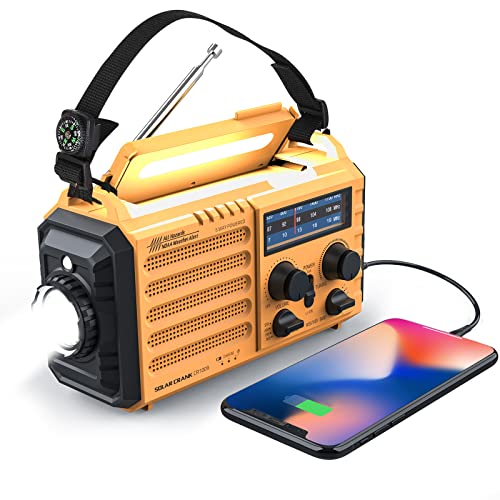
Raynic’s weather radio offers a robust 5000mAh/18500mWh capacity with five charging options, including hand crank, solar panel, AC, USB, and a built-in rechargeable battery. It supports AM/FM/SW/NOAA weather channels and includes a USB port for charging mobile devices. The large HD LCD display helps users monitor battery life and current frequencies, while the 3W integrated flashlight and 2.5W reading lamp improve visibility during outages. A headphone jack lets you listen discreetly if needed.
For car scenarios, the multiple charging modes are highly beneficial when access to power is uncertain. It provides reliable NOAA alerts and a straightforward tuning process to lock onto important channels. The inclusion of a reading lamp and flashlight enhances usability in dark environments, such as in a vehicle at night. The device’s durability and power versatility make it a practical choice for road trips, camping, and emergency kits.
iRonsnow Solar Emergency Hand Crank Radio
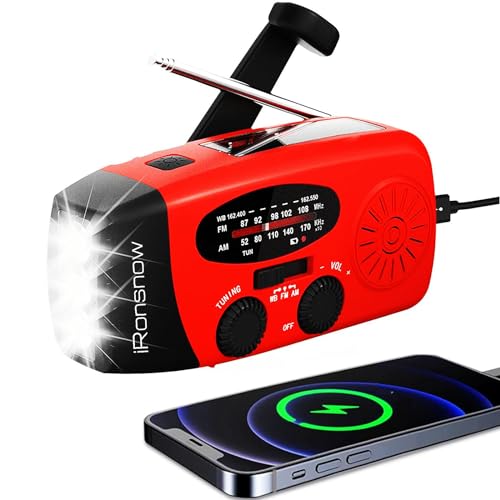
The iRonsnow model is a compact, upgraded hand crank radio with a 2000mAh emergency power bank and a battery level indicator. It provides SOS signaling and an LED flashlight, with two lighting modes for visibility and safety. It includes a charging level indicator that shows power status across four levels, helping users manage battery life. This model supports multiple charging modes, including USB, solar, and hand crank, making it well-suited for car use and outdoor emergencies.
The device is designed for straightforward operation in a hurry, with essential NOAA weather alerts and reliable AM/FM reception. For car travelers, the multi-mode charging capability and SOS features are practical for quick access to weather updates and emergency signaling in adverse conditions. The visual indicators also assist users in efficiently managing power during critical moments.
Buying Guide: Key Purchase Considerations
- Power options: Look for models with multiple charging methods (hand crank, solar, USB, AC) to stay powered during outages.
- NOAA and local alerts: Ensure the radio receives continuous NOAA alerts and offers S.A.M.E localized programming or region-specific alerts when possible.
- Battery capacity and charging speed: Higher mAh ratings extend operation time; consider how quickly the unit recharges and supports USB charging for devices.
- Portability: For car use, select compact, lightweight units with intuitive controls and easily accessible alert indicators.
- Emergency features: A built-in flashlight, SOS alarm, and reading lamp increase utility during power cuts or roadside emergencies.
- Display and usability: A clear LCD or LED display helps monitor battery life and frequencies; tactile buttons reduce confusion in urgent situations.
- Durability and weather resistance: Durable housings and protective covers help protect against dust, rain, and rough handling on trips or camping.
- Phone charging capability: If power banks support USB charging, ensure you can reliably power essential calls or messages to contact help.
- Price and availability: Evaluate models by features and expected use cases; prioritize models with proven alert reliability.
When choosing a weather radio for car use, align features with typical scenarios you may encounter on the road or at campsites. If you frequently travel through areas with severe weather, prioritize models with robust alert systems and reliable power backup. For everyday camping or emergency kits, balance power options with portability and ease of use. All five models above provide strong NOAA alert capabilities and multi-source charging, offering viable choices for different budgets and needs.