Finding an accurate, easy-to-read speed monitor can reduce distraction and help drivers stay within speed limits. This article highlights five reliable HUD (Heads-Up Display) style speed monitors that plug into your vehicle’s OBD-II or GPS system, offering real-time speed, RPM, fuel data, and safety alerts. Each product is evaluated on readability, installation, and how well it integrates with a variety of cars, trucks, and SUVs. Use this guide to compare features and choose a model that fits your driving style and safety needs.
Below is a quick summary table of the selected products to help you compare at a glance. The table lists key features such as data sources (OBD-II or GPS), display size, alert types, and installation options.
| Product | Source | Display | Alerts | Note |
|---|---|---|---|---|
| wiiyii OBD2 Gauge Display | OBD II | Digital HUD | Overspeed Alarm | Mounts on dash or windshield |
| SinoTrack Digital GPS Speedometer | GPS | 5.5″ LCD | Speeding & Fatigue Alerts | Auto-brightness sensor |
| GEARBONE OBD2 HUD | OBD II | Digital Speedometer | Fault Code Reading | Direct plug-and-play |
| Docbraces HUD | GPS | LED Display | Overspeed & Fatigue Alerts | USB plug-and-play |
| GUGUMO GPS Digital Speedometer | GPS | HUD Display | None listed | Plug-and-play, universal fit |
wiiyii OBD2 Gauge Display Heads Up
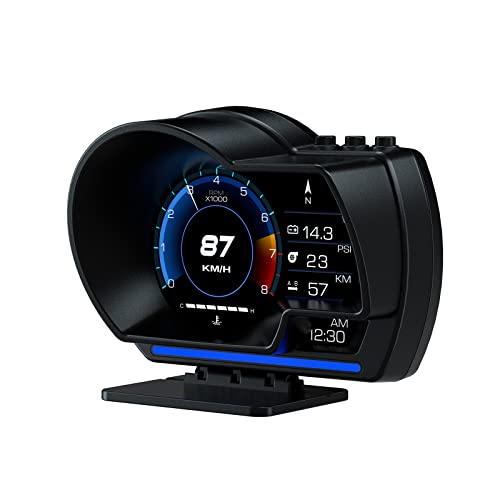
The wiiyii OBD2 HUD provides a clear digital speed readout, angle-adjustable display, and two installation methods (dashboard or windshield). It offers 10 interface options and supports data such as speed, RPM, water temperature, and more. The device emphasizes reducing driver distraction by presenting essential data at a glance and includes an overspeed alarm to aid in maintaining safe speeds on highways. It is designed for broad compatibility with many cars that support OBD-II connections.
Key features include a direct OBD-II connection for real-time data, non-destructive installation, and multiple display interfaces. For drivers who want a simple, glanceable readout without digging into the vehicle’s built-in gauges, this model prioritizes readability and ease of use. The product targets everyday driving, highway cruising, and fleet use where quick speed awareness matters.
SinoTrack Digital GPS Speedometer HUD

The SinoTrack GPS Speedometer HUD uses a large 5.5-inch LCD to display MPH data along with driving time, mileage, direction, and satellite count. It adds important safety alerts for speeding and fatigued driving, helping drivers remain alert on long trips. An auto-brightness sensor ensures clear visibility in both daylight and nighttime driving. This unit emphasizes real-time, GPS-based readings independent of the car’s factory gauges, making it a strong choice for older vehicles with limited instrumentation.
Highlights include a dual alert system for speed and fatigue, automatic brightness adjustment, and a built-in compass for directional context. Its GPS-based display means speed readings remain accurate even if the vehicle’s internal sensors vary. This model appeals to drivers who prioritize safety reminders and long-drive fatigue awareness, especially on interstates and rural routes with fewer dashboard gauges.
OBD2 HUD Head Up Display by GEARBONE

GEARBONE’s OBD2 HUD provides an all-in-one digital speed readout with real-time data such as speed, water temperature, RPM, voltage, fuel economy, and more. The device doubles as a fault code reader, supporting code retrieval and clearing on compatible vehicles, which can help with DIY troubleshooting and maintenance planning. This model is particularly useful for older or economy vehicles that may lack comprehensive gauges, providing essential metrics in a compact HUD format.
Designed for direct plug-and-play installation, the GEARBONE HUD emphasizes reliability and practical data presentation. It suits drivers who want a single device to monitor speed as well as engine parameters, potentially reducing maintenance visits and helping catch potential issues before they escalate.
Docbraces HUD Heads Up Display

The Docbraces HUD emphasizes GPS-based speed readings with an emphasis on readability and safety alerts. It features a six-display mode and a high-refresh-rate signal reception (10Hz) for stable speed data. The device supports automatic brightness adjustment to maintain legibility in varying lighting conditions, improving on-road visibility and reducing glare. The system aims to be easy to mount and use, with a focus on a straightforward plug-and-play setup for quick installation.
In addition to speed display, this HUD highlights direction data and overall readability, which can be beneficial for new drivers or those who prefer a minimalist cockpit. The device’s emphasis on automatic brightness and stable satellite reception makes it suitable for daytime city driving and nighttime highway cruising alike.
GUGUMO GPS Digital Speedometer

GUGUMO’s GPS Digital Speedometer provides a streamlined speed readout with GPS accuracy and a universal plug-and-play design. It claims compatibility with a wide range of vehicles including cars, trucks, motorcycles, and golf carts. The device focuses on a straightforward speed display with a standalone GPS module, ensuring readings are independent of the vehicle’s own sensors. This makes it a versatile option for multi-vehicle households or fleet use where a simple, reliable speed readout is essential.
The emphasis on rapid installation and universal compatibility makes this model a practical option for buyers who want a low-effort upgrade. While it concentrates on speed display, it can be paired with other HUD features to broaden situational awareness on the road.
Buying Guide: Key Purchase Considerations
- Data source: Choose between OBD-II connected HUDs (real-time vehicle data from the car’s computer) and GPS-based HUDs (independent readings). OBD-II units can show RPM, coolant temperature, and more, but require a compatible port. GPS HUDs excel when vehicle data is incomplete or unreliable.
- Display type and readability: Look for large, high-contrast displays with adjustable brightness and anti-glare features. Auto-brightness helps in bright daylight and at night, reducing eye strain.
- Alerts and safety features: Overspeed alerts, fatigue warnings, and fault-code reading improve driving safety and maintenance awareness. Consider how you’ll use these alerts on long trips or in heavy traffic.
- Installation and compatibility: Ensure the unit supports your vehicle’s year, model, and port type. Dash vs. windshield mounting preferences can influence installation ease and visibility.
- Power consumption and durability: Devices with intelligent power management extend battery life during parking or engine-off scenarios. Water resistance and build quality matter for long-term reliability in varied climates.
- Maintenance and support: Check for firmware updates, customer support quality, and whether the device can read and clear fault codes, which can save time and money on diagnostics.
- Value for money: Weigh the cost against data depth, display quality, and additional features like GPS routing or map integration. For fleet use, durability and ease of calibration become more important than flashy interfaces.
Across these models, buyers should balance the desire for a simple speed readout with the need for additional data points like RPM, fuel economy, and engine temperatures. GPS-based HUDs are excellent for older cars lacking full gauge clusters, while OBD-II units provide broader data and potential fault-code insights. Consider your driving style, vehicle type, and installation preferences to choose the best speed monitor for your car.