Choosing the right tow hitch for RV-to-car towing involves assessing capacity, compatibility, installation ease, and durability. The following hand-picked selections represent popular, widely compatible options designed to handle daily rig towing needs while withstanding road conditions. Each product is evaluated for strength, fit, and ease of use, helping you compare options at a glance.
| Product | Brand | Estimated Capacity | Typical Fit | Opening Width |
|---|---|---|---|---|
| Nilight Tow Bar | Nilight | 5000–5500 lbs | 2″ hitch receivers | 41″ |
| Draw-Tite 75235 | Draw-Tite | Class 3 strength | 2″ receiver | — |
| Draw-Tite 76342 | Draw-Tite | Class 3 strength | 2″ receiver | — |
| CURT 19745 Universal Car RV Tow Bar | CURT | 5,000 lbs | 2″ coupler | 41″–26″ |
| VEVOR Tow Bar | VEVOR | 5,500 lbs | 2″ ball hitch | 41″ |
Nilight Tow Bar With Safety Chains

The Nilight tow bar is designed for bumper-mounted towing with a 2-inch hitch ball and safety chain integration. It features quick-connect brackets to simplify installation and removal, making it a practical choice for RV owners who want fast setup and teardown. The system provides a towing capacity around 5000 to 5500 pounds, depending on configuration, and its arms extend from 24 inches to 41 inches to accommodate various vehicle widths. Durable alloy steel construction supports frequent use, while a robust A-frame coupler enhances connection reliability.
Key considerations: compatibility with a bumper mount, quick-connect mechanism, and adjustable width. Potential users should verify the exact compatibility with their RV’s hitch and ensure the capacity aligns with the load they expect to tow. The Nilight model is well-suited for mixed towing scenarios, including RV-to-car and trailer assistance, with emphasis on straightforward installation.
Draw-Tite Class 3 Trailer Hitch, 2 Inch Square Receiver

This Draw-Tite Class 3 hitch is built for a precise vehicle fit, specifically cited for 2006–2018 Toyota RAV4 models. It uses an all-welded steel design for maximum strength and is protected with a black powder coat to resist rust and corrosion. The hitch undergoes fatigue and stress testing to ensure reliability during towing and daily use. It’s a solid option for RV-to-car towing setups on compatible crossovers and SUVs, delivering a balance of strength and corrosion resistance alongside straightforward installation.
Reference points: vehicle-specific fit, heavy-duty construction, and finish protection. Prospective buyers should confirm their vehicle’s compatibility and review any mounting hardware requirements. It’s a practical pick for RVers who prioritize a factory-like fit and long-term durability.
Draw-Tite Class 3 Trailer Hitch for Honda CR-V

This Draw-Tite hitch is tailored for 2017–2025 Honda CR-V models, offering a sturdy 2-inch square receiver and robust all-welded steel construction. It undergoes rigorous fatigue and stress testing, with a two-part black powder coat finish for corrosion protection. The product is designed to meet or exceed industry standards (V-5 and SAE J684), providing confidence in reliability during RV-to-car towing. It’s a solid option when the CR-V serves as a tow vehicle in a mixed RV setup, combining strength with precise fitment.
Important notes: verify vehicle year and trim for compatibility, and plan for proper installation alignment. This hitch emphasizes performance under load and long service life, suitable for regular towing tasks behind compatible SUVs and RVs.
VEVOR Tow Bar, 5500 Lbs Capacity

The VEVOR tow bar features a 5500-pound towing capacity and a 2-inch ball hitch with an adjustable width up to 41 inches. Built from heavy-duty alloy steel, it includes grade 8.8 bolts for added strength. The design emphasizes a snap-and-go installation style, reducing setup time for RV-to-car towing tasks. It’s suitable for a range of light-to-mid-weight towing scenarios and includes a bumper-mounted configuration for practical mounting options.
Key considerations: ensure the mounting surface and bumper design support bumper-mounted towing, and confirm that the vehicle combination stays within the rated capacity. The finish is intended to withstand weather exposure, contributing to long-term usability in varied climates.
CURT Universal Car RV Tow Bars
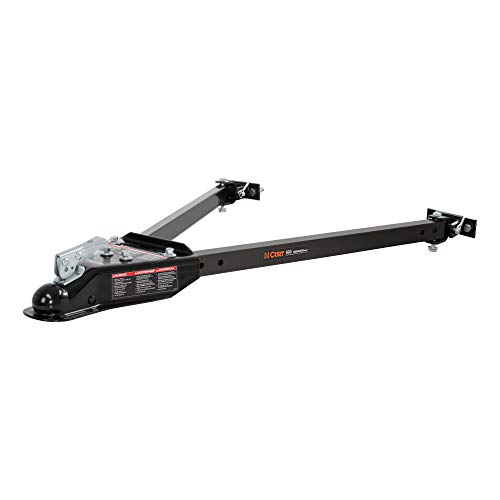
The CURT 19745 universal tow bar is designed for dinghy or flat towing a car or small vehicle behind a motorhome, with a 5,000-pound rating and a 2-inch coupler. It offers wide adjustment, with the ability to open and close from 41 inches to 26 inches, enabling connectivity across a broad range of vehicle widths. After bolting brackets to the bumper, the tow bar attaches to a standard 2-inch trailer ball on the RV, providing a flexible towing solution that suits many RV and car combinations.
Purchase considerations: assess the maximum vehicle width you’ll encounter, ensure proper mounting space on your bumper, and verify that the tow bar’s rated weight aligns with the towed vehicle. It’s a versatile option for RV owners seeking standardized hardware with broad compatibility.
Buying Guide: Tow Hitch Essentials For RV-To-Car Towing
- Capacity and class: Match the hitch class with the gross vehicle weight of both the RV and towed vehicle. Class 3 hitches and 5,000–10,000 lb ratings cover a wide range of mid-size to large setups.
- Receiver size and compatibility: Most consumer tow bars use a 2-inch receiver or coupler. Confirm your RV’s hitch size and bumper mounting compatibility before purchasing.
- Mounting style: bumper-mounted vs. frame-mounted options affect installation complexity and vehicle compatibility. Consider your bumper design, access to mounting points, and the ease of future removal.
- Material and finish: Look for heavy-duty steel construction with corrosion-resistant finishes (powder coat). This ensures longevity in varying climates and road conditions.
- Adjustability: Wide opening widths and adjustable arms ease alignment with diverse vehicles. Ensure the range covers your typical towing scenarios.
- Safety features: Safety chains, good coupler connections, and robust bolts contribute to secure towing. Verify chain engagement points and hardware quality.
- Standards and testing: Hitches that meet SAE or V-5 standards and undergo fatigue testing offer additional reliability assurances for long-term use.
- Installation effort: Evaluate whether the installation requires professional tools or can be completed with basic hand tools. Consider whether you’ll need assistance for heavier assemblies.
- Maintenance: Periodic inspection of bolts, welds, and coatings helps prevent failures. Keep a maintenance schedule for one-year and multi-year cycles.
In summary, the best RV-to-car tow hitch choice depends on vehicle compatibility, towing needs, and installation ease. The options listed provide a spectrum from quick-connect bumper mounts to heavy-duty, standard 2-inch receivers. Users should verify compatibility with their specific RV and vehicle configuration, and consider future towing needs, weather exposure, and maintenance requirements when selecting a hitch.