Choosing the right ramp to move a scooter from a car to the road and back can improve safety and ease every trip. This guide reviews five top ramps and carriers designed to handle scooters, wheelchairs, and other mobility devices. We compare load capacity, materials, portability, and installation to help you pick a solution that fits your vehicle and daily routine.
| Product | Vehicle Compatibility | Capacity | Key Advantage |
|---|---|---|---|
| FACHNUO 5 Feet Wheelchair Ramp | Steps, thresholds, doorways | 800 lbs | Long, non-slip aluminum with dual rails |
| Goplus Mobility Scooter Carrier | Cars with 2″ hitch | 500 lbs | Folding tray with built-in ramp |
| ECOTRIC Hitch Mount Carrier | Vehicles with Class III/IV hitch | 500 lbs | Basket-style carrier for multiple gear |
| Mockins 40″ x 40″ Carrier With Ramp | 2″ hitch receivers | 500 lbs | Integrated ramp and stabilizer for heavy loads |
| Black Aluminum Ramp 7FT (FACHNUO TOOL) | Steps and thresholds | 800 lbs | Extra-long for higher steps, non-slip surface |
These options span lightweight folding ramps to full hitch-mounted carriers, offering a range of installation styles to fit a typical American car and scooter setup. Below, five selected products are explored in detail to help you compare performance and safety features side by side.
FACHNUO 5 Feet Wheelchair Ramp

The 5-foot unfolded ramp (60” x 29” x 2”) provides extended length to bridge higher steps and entry thresholds, with a folded size of 30” x 14.5” x 6.3”. It is designed for up to 800 lbs and includes safety-conscious features such as visible baffles and reflective strips on both sides to reduce the risk of missteps in low-light conditions. Extended top and bottom rails help align the ramp to ground surfaces and prevent falls. The surface is non-slip thanks to a reinforced texture, and the design includes a pleated pattern that increases friction for additional grip. This ramp is well-suited for scooters and wheelchairs navigating home steps, thresholds, and doorways. Its 5-inch to 15-inch recommended rise helps guide the user safely up or down elevations.
Goplus Mobility Scooter Carrier
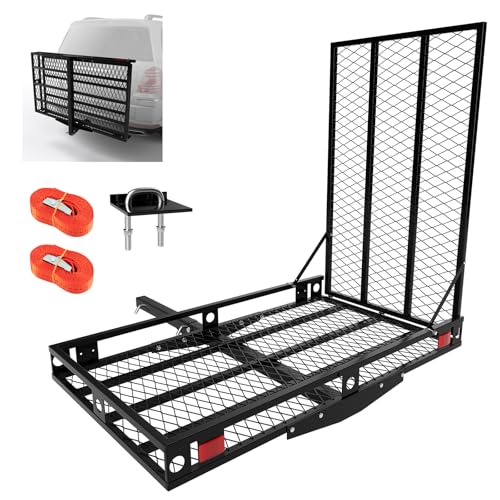
This 50” x 29.5” folding carrier attaches to a 2″ hitch receiver, making it compatible with most cars, SUVs, and trucks. The carrier supports up to 500 lbs and includes a ramp for easy loading and unloading. A stabilizer and two tie-down straps help secure the scooter during transit, while the fold-flat design allows convenient parking when the carrier is not in use. This setup is ideal for users who want to avoid removing a scooter from a vehicle and prefer a ready-to-use transport solution with straightforward setup.
ECOTRIC Hitch Mount Carrier with Mobility Ramp

ECOTRIC offers a basket-style hitch carrier compatible with Class III or IV 2″ hitches, rated up to 500 lbs. The carrier includes a mobility ramp, enabling easier loading and unloading of a scooter, wheelchair, or lawn equipment. The heavy-duty steel construction paired with a black powder-coated finish provides durability and rust resistance, making it suitable for frequent use and various transport scenarios. The product supports diverse cargo in addition to mobility devices, offering flexible outdoor and travel applications.
Mockins 40″ x 40″ Carrier With Ramp

This square hitch carrier measures 40” x 40” with a 4″ height and folds away when not in use. It includes a built-in ramp that extends to facilitate loading, plus a stabilizer system and a hitch pin lock for anti-rattle performance. Its 500-pound capacity makes it suitable for bulky loads such as scooters, wheelchairs, bikes, and other gear. The design emphasizes safety with multiple tie-down points and edge protection to prevent damage to cargo or vehicle surfaces during transit.
Black Aluminum Ramp 4FT (FACHNUO TOOL)
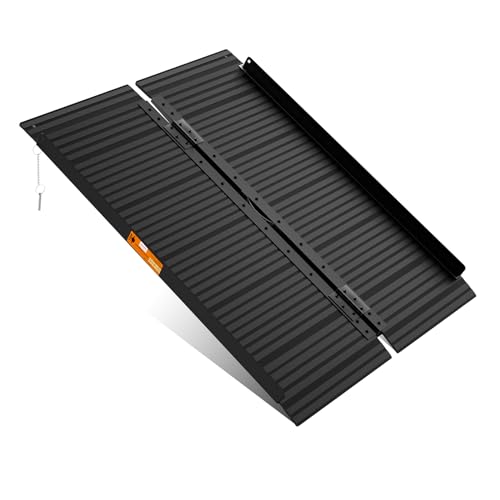
This 4-foot ramp combines foldability with a robust 800-lb capacity. It is specifically designed for 4″-12″ step heights, making it a versatile choice for home entrances and car doors. The ramp features a double non-slip design with a black frosted surface pattern and rubber anti-slip pads on the top and bottom transition plates to minimize movement and reduce tripping risks. The aluminum construction balances light weight with durability, and the ramp includes safety-focused elements like orange side warning signs for nighttime visibility and a stainless steel hinge in the middle to maintain a flat surface during use.
Buying Guide: Key Purchase Considerations
When choosing a ramp or carrier for scooters and wheelchairs, consider how you typically use it, how easy it is to store, and how it will perform in different environments. The following perspectives help you assess options objectively:
- Vehicle compatibility: Determine whether you need a ramp that attaches to the vehicle for loading and unloading (folding ramps) or a hitch-mounted carrier system. Check your vehicle’s hitch class (II, III, or IV) and the receiver size to ensure proper fit.
- Weight capacity: Verify the maximum load rating for the ramp or carrier, including the scooter or wheelchair plus any gear. Higher capacity is critical for heavy mobility devices and safe operation.
- Ramp length vs. rise: Longer ramps reduce the required incline but take more storage space. For higher steps, consider a 7-foot or longer ramp or a carrier with integrated ramp. Shorter ramps may be insufficient for taller thresholds.
- Material and durability: Aluminum ramps are lighter and resistant to corrosion, ideal for frequent use and weather exposure. Steel carriers offer robust strength but may be heavier and require more maintenance.
- Non-slip and safety features: Look for textured surfaces, side rails or reflectors, and rubber pads to prevent movement. Reflective strips and high-visibility colors improve safety in low-light conditions.
- Portability and storage: Folding designs, carry handles, and compact folded dimensions facilitate storage in garages or trunks. Consider how easy it is to deploy and clean after use.
- Ease of loading: Built-in ramps or easily deployable ramps simplify loading. Some carriers include tie-down straps and anti-rattle mechanisms to stabilize loads during transit.
- Vehicle access and clearance: Some setups sit flush with the bumper and allow tailgate access, while larger carriers may restrict trunk or hatch opening. Confirm clearance with your vehicle when planning cargo.
- Pricing and warranties: Compare upfront costs and warranty terms. While a lower-cost option may suit light use, a more robust system can offer long-term value through safety and reliability.
Choosing between a standalone ramp and a hitch-mounted carrier depends on usage frequency, vehicle type, and storage space. For frequent travelers who value quick setup, a folding ramp or a carrier with an integrated ramp may provide the best balance of convenience and safety. For occasional use around the home, a 4–5 foot ramp with non-slip features can be sufficient and space-efficient.