Choosing a reliable portable air conditioner is essential for comfort and food safety in mobile kitchens. This guide highlights top 5 RV and mobile-vehicle AC units that balance cooling power, energy use, and noise. Each option is evaluated for 12V or 115V operation, ease of installation, and suitability for food trucks and trailers. Use the quick reference table below to compare core specs at a glance.
| Product | |||
|---|---|---|---|
| Countrymod 10000 BTU | 10,000 BTU | 12V DC | 45-55 |
| Countrymod 11000 BTU | 11,000 BTU | 12V DC | 45-55 |
| RV 12V 10000 BTU (Outequip) | 10,000 BTU | 12V DC | Not specified |
| RecPro 15K | 15,000 BTU | 115V | ~55 |
| Fogatti InstaCool 13.5K | 13,500 BTU | 115V + 12V | Not specified |
Below, five carefully chosen units are described with key features, compatible use cases for food trucks, and practical considerations to help operators select the best fit for their mobile kitchen workflow.
Countrymod 10000 BTU RV AC Unit Review

The Countrymod 10000 BTU unit is designed for mobile environments, including food trucks, with a 12V DC inverter cooling system. It emphasizes rapid cooling through a variable frequency compressor that adjusts output on demand. Energy efficiency is highlighted, consuming about 0.3 kWh per hour, which can extend battery life to around 10 hours under suitable conditions. Noise levels are marketed as ultra-low, in the 45–55 dB range, delivering even air distribution to reduce direct blowing discomfort in compact RV spaces.
Key considerations for food trucks: low draw on power compared to traditional ACs, making it suitable for solar or generator setups; the non-ducted design suits rooftop or compact interior installations; ensure electrical infrastructure can support inverter operation and consider battery backup during peak service times.
Countrymod 11000 BTU RV AC Unit Overview

This 11,000 BTU Countrymod model expands cooling capacity while retaining 12V DC inverter operation. The design emphasizes rapid cooling with a variable frequency compressor that adjusts to demand and maintains comfortable cabin temperatures. The unit also claims energy efficiency at around 0.3 kWh per hour and a typical battery life close to 10 hours. Noise targets remain in the 45–55 dB range to minimize disruption inside the vehicle as it cools.
Food-truck relevance includes higher cooling capacity for warmer deployments or larger interiors, paired with the same energy-conscious design. When evaluating, verify compatibility with your vehicle’s electrical system and any necessary mounting hardware for rooftop or non-ducted installs.
Outequip 12V 10000 BTU Rooftop AC For RVs

The Outequip 12V 10000 BTU rooftop unit targets RVs, trucks, vans, and food trucks with a focus on quick cooling and a heater option for shoulder seasons. It combines efficient cooling with a compact, durable build designed to withstand outdoor use and rough service. The 12V compatibility helps reduce energy strain on a mobile kitchen’s electrical system, making it suitable for off-grid setups when paired with appropriate power management.
Considerations for a food truck: ensure 12V supply reliability, confirm rooftop clearance and mounting compatibility, and assess if the heater is needed for nighttime service or cooler regions without compromising the primary cooling function.
RecPro 15K RV Roof AC Review

The RecPro 15K unit is a larger-capacity option at 15,000 BTU and is designed for 110–120V operation. It emphasizes energy efficiency through low amp draw, making it compatible with solar or generator-based power setups commonly used in food trucks. The unit is built with UV-resistant plastic for durability and features a quiet operation profile around 55 dB, which helps reduce ambient noise during service and while resting in the vehicle.
Food truck operators may appreciate the higher cooling capacity for peak heat days, particularly for larger interiors or multi-station kitchens. Pairing with a suitable electrical system and ensuring proper installation space are key steps in getting the most from this unit.
Fogatti InstaCool 13.5K RV Air Conditioner
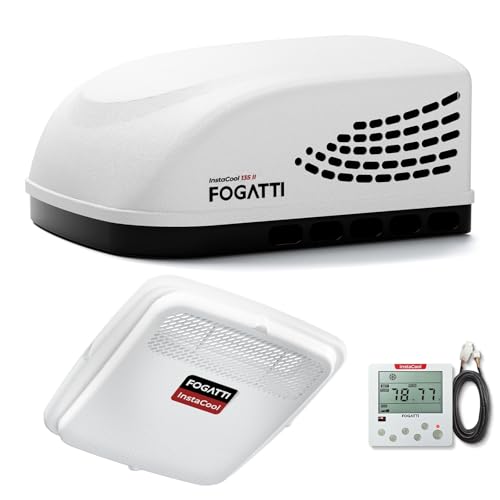
The Fogatti InstaCool 13,500 BTU unit is designed for quick chill with dual high-efficiency compressors and uses eco-friendly R32 refrigerant. It requires connection to both 115V AC power and 12V DC power, which is common for RV and food-truck rooftop installations that use both power sources. The design emphasizes smart energy savings through balanced cooling power and an intelligent temperature regulation system aimed at delivering comfort while preserving electrical capacity for other equipment.
For a food truck, this model can provide robust cooling during busy hours and accommodate varying electrical setups. Ensure that your vehicle’s electrical system can support both the AC and any other high-draw devices, and plan for proper ventilation and clearances around the roof unit.
Buying Guide: Key Purchase Considerations For Food Trucks
- Power source compatibility: Determine whether your setup relies on 12V DC inverter power, 115V AC, or a hybrid approach. Inverter-based units can be gentler on battery systems, but require reliable electrical availability to avoid interruptions during service.
- Cooling capacity vs. space: Choose BTU ratings that match the interior footprint of your truck or trailer. Higher BTU units cool larger areas but may require more power and space; smaller interiors benefit from efficient, lower-BTU models with good airflow.
- Energy efficiency: Look for inverter technology and low amp draw. Energy-efficient units help preserve battery life on off-grid days and reduce generator runtime.
- Noise levels: Quiet operation improves staff communication, customer experience, and rest during downtime. Target units advertised at or below 55 dB where possible.
- Durability and weather resistance: Food trucks face outdoor conditions; UV-stable housings, corrosion-resistant components, and robust mounting options help longevity.
- Installation flexibility: Consider rooftop vs. non-ducted, as well as the availability of mounting hardware and seal kits. Non-ducted units are simpler for compact interiors, while rooftop models provide higher BTU options for larger spaces.
- Maintenance and serviceability: Check for parts availability, warranty terms, and the ease of cleaning or replacing components like air filters and condensate lines.
- Temperature control features: Look for precise thermostats, sleep modes, and timers that support 24-hour operation for food prep and service windows.