Finding a reliable ramp or carrier for mobility scooters and wheelchairs can simplify travel and improve independence. This guide reviews five top-rated options that fit common 2″ hitch receivers and offer sturdy construction, ample weight capacity, and practical ramps. Each choice is designed to load smoothly, secure cargo, and resist weather wear for years of use.
| Product | Brand | Ramp/Loading Length | Capacity |
|---|---|---|---|
| Silver Spring Steel Mobility Scooter & Wheelchair Carrier with 42-Inch Ramp | Silver Spring | 42 inches | 500 lbs |
| Silver Spring Folding Steel Wheelchair Carrier with Ramp | Silver Spring | 48 inches | 500 lbs |
| Goplus Mobility Scooter Carrier with 42” Ramp | Goplus | 42 inches | 500 lbs |
| ECOTRIC Hitch Mount Wheelchair Carrier with Mobility Ramp | ECOTRIC | Approx. 42 inches ramp | 500 lbs |
| Mockins 40″x40″x4″ Square Heavy Duty Carrier with Ramp | Mockins | 46.5 inches ramp (folding) | 500 lbs |
These options emphasize stability, ease of loading, and secure attachment to Class III or IV 2″ receivers. The following sections detail each product, highlighting features that impact daily use, safety, and transport versatility across cars, SUVs, and trucks.
Silver Spring Steel Carrier With 42-Inch Ramp

The Silver Spring Steel Mobility Scooter & Wheelchair Carrier is built to support up to 500 pounds, making it suitable for a wide range of scooters and wheelchairs. Its 42-inch ramp facilitates straightforward rolling on and off, while the heavy-duty steel frame provides durability in all weather conditions. A powder-coated finish resists rust, helping maintain a clean appearance over time. Practical stability features include an anti-rattle device and a secure hitch pin to minimize movement during travel. Ten tie-down points enable multiple securing options to keep equipment steady during highway miles.
Users benefit from the flat-fold design when the carrier is not in use, ensuring the trunk or hatch remains accessible. This versatility is especially valuable for vehicles with limited cargo space or crawl-through access. The carrier’s mount is designed for straightforward installation and removal, reducing the effort required for seasonal storage or trips to the store. Overall, this model emphasizes rugged reliability, making it a strong choice for frequent travelers who require a simple, heavy-duty loading solution.
Silver Spring Folding Steel Carrier With Ramp

This Silver Spring Folding Steel Wheelchair Carrier features a broad 48″ x 27.75″ platform and folds upright against the vehicle when not in use. The folding design saves space and makes parking and garage access easier, particularly for vehicles with tight access. The carrier includes an anti-rattle device, a 5/8″ hitch pin, and a practical T-handle spring pin, along with ten tie-down points to secure mobility equipment. These security features help prevent sway and shifting during transit and rain-soaked road surfaces.
With a straightforward loading process and sturdy construction, the unit is well-suited for scooters and wheelchairs. Its overall footprint balances capacity with vehicle compatibility, offering a versatile option for drivers who want a more compact, stowable carrier without sacrificing load capacity or safety. The combination of a robust frame and thoughtful hardware makes it a reliable solution for frequent loading and unloading on road trips or daily errands.
Goplus 50” Folding Carrier With Ramp
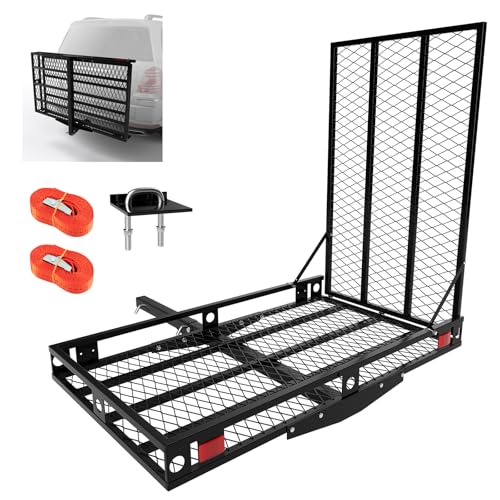
The Goplus Carrier is a versatile 50” x 29.5” platform rated for 500 pounds and designed for 2″ hitch receivers. Its ramp is 42” long, providing a gentle incline that eases loading of scooters and wheelchairs. The all-metal construction emphasizes durability, and the unit folds for space-saving storage when not in use. This carrier is suitable for SUVs, trucks, and vans, and its design supports loading from multiple angles, which can be helpful when maneuvering larger equipment into position.
Installation is straightforward, with a universal 2″ hitch fit that accommodates most Class III or IV receivers. The carrier’s weight and dimensions strike a balance between load capacity and vehicle compatibility, making it a practical option for drivers who need reliable performance without excessive bulk. The ramp and platform together offer a user-friendly experience for day-to-day transport and occasional longer trips.
ECOTRIC Hitch Mount Carrier With Mobility Ramp

The ECOTRIC basket-style carrier is designed for trucks, SUVs, and vans, with a 500-pound load capacity and a 2″ hitch compatibility. The unit combines a sturdy steel frame with a black powder-coated finish for rust resistance and durability, and it includes integrated pull locks for secure operation. The ramp is designed to facilitate easy loading of wheelchairs and scooters, and the carrier provides a practical rear-loading option for bulky equipment. The package notes use of a class III or IV hitch system, reinforcing compatibility with a broad range of vehicles.
Key advantages include its practical, basket-style design, which offers a roomy interior for various cargo beyond mobility devices, and the inclusion of robust hardware to minimize sway and vibration during transit. The ECOTRIC model is appropriate for drivers seeking a straightforward, rugged carrier that prioritizes load security and ease of use on a wide array of road conditions.
Mockins Heavy Duty Carrier With Ramp

The Mockins 40″x40″x4″ Square Carrier is built to handle up to 500 pounds and includes a 46.5″ loading ramp. Its 2″ hitch compatibility and weatherproof, powder-coated steel construction ensure resilience against rust and road debris. The ramp can be folded for tailgate clearance and features a protective rubber edge to shield vehicle surfaces during loading. A stabilizer and hitch pin lock contribute to anti-rattle performance, while multiple straps and high-side rails help keep the load secure on highways and backroads alike.
This model emphasizes versatility and safety, with multiple securing points and accessories designed to minimize cargo movement. The large loading area and sturdy ramp make it suitable for bulky mobility devices as well as other equipment such as generators or outdoor gear. The design aims to provide a stable, reliable transport option for users who prioritize security and ease of use on long trips or daily errands.
Buying Guide: Key Purchase Considerations
When choosing a mobility scooter ramp or carrier, consider the following factors to ensure the best fit for your vehicle and needs:
- Weight capacity: All reviewed options support up to 500 pounds, which covers most mobility scooters and wheelchairs. Confirm the combined weight of your load and ramp/carrying system, including accessories.
- Vehicle compatibility: Most models target 2″ hitch receivers (Class III or IV). Verify your vehicle’s hitch class and available mounting space for your trunk or hitch area.
- Ramp length and incline: Longer ramps reduce incline angle, easing loading. Compare ramp lengths (e.g., 42″ vs 48″) relative to your vehicle height and the floor height of your mobility device.
- Folding and storage: Foldable technologies save space and improve access to cargo areas when not in use. Consider how easy it is to fold and store the ramp or carrier.
- Stability features: Anti-rattle devices, stabilizers, and tie-down points help minimize movement during transit. Look for multiple tie-down options and secure locking mechanisms.
- Durability and weather resistance: Powder-coated steel and rust-resistant finishes extend the life of outdoor use. Consider environments where exposure to rain, salt, or snow is common.
- Versatility: Some carriers double as luggage racks or cargo baskets for other equipment. If you plan to transport items beyond mobility aids, ensure the design accommodates varied loads.
- Installation and maintenance: Evaluate how easy it is to install, remove, or service the unit. Look for clearly labeled components, and consider whether professional installation is preferred.
These considerations help compare products on practical use, safety, and cost-effectiveness. Users should assess their typical vehicle type, storage constraints, and loading frequency to pick the best option for daily commuting, vacations, or routine trips.