Choosing the right heat shield for your exhaust system helps protect vital components, improve performance, and extend engine life. This guide highlights five reliable options, detailing materials, temperature resistance, and installation features. Each product is designed to withstand high heat, reduce radiant warmth, and fit a range of exhaust layouts from mufflers to underbody pipes. Use this overview to compare thickness, sizing, and mounting accessories before purchasing.
Summary of chosen products:
- SINNSIDELIN Exhaust Heat Shield Automotive – 16″ x 78.7″ (0.5 mm) – embossed aluminum with ties
- BSTFLEX Embossed Aluminum Heat Shield – 12″ x 20″ – durable and easy to cut
- SINNSIDELIN Exhaust Heat Shield – 16″ x 39″ – compact, 0.5 mm
- Chocikick Exhaust Heat Shield – 16″ x 78.7″ – 0.5 mm, flexible and durable
- AggSound Exhaust Heat Shield – 16″ x 13″ – two-pack, stainless ties included
SINNSIDELIN 16″ x 78.7″ Aluminum Heat Shield Kit

The SINNSIDELIN 16″ x 78.7″ heat shield is built from heavy-duty embossed aluminum with a 0.5 mm thickness. Its flexible design allows for bending and cutting to fit curved exhaust routes and chassis contours. The shield can sustain temperatures up to 1022°F, making it suitable for muffler ducts, exhaust hoods, and surrounding components that demand reliable thermal protection. The kit includes 20 cable metal ties for secure mounting and quick installations, reducing the need for additional hardware.
Key considerations:
- Material: embossed aluminum for stiffness, flexibility, and reflective properties.
- Temperature tolerance: up to 1022°F (550°C) to shield critical parts.
- Installation: includes 20 cable ties for fast, secure mounting.
BSTFLEX 12″ x 20″ Aluminum Heat Shield

The BSTFLEX heat shield uses insulated aluminum with a 12″ by 20″ footprint, designed to defend against high-heat exposure in automotive applications. It withstands continuous temperatures up to 1100°F and is easy to cut with tin snips. The shield folds and edges can be formed with a hammer for clean mounting along mufflers, chassis, or near catalytic converters. This option provides durable thermal insulation and an economical sizing for compact engine bays or restricted spaces.
Key considerations:
- Temperature tolerance: up to 1100°F continuous exposure.
- Material: insulated aluminum; more durable than standard cloth shields.
- Fabrication: easy to cut and form for custom-fit installations.
SINNSIDELIN 16″ x 39″ Aluminum Shield Kit

This 16″ by 39″ heat shield from SINNSIDELIN features the same 0.5 mm embossed aluminum construction, offering flexibility for mid-length segments of exhaust runs. With a high-temperature rating around 1022°F, it provides reliable protection for mufflers, chassis areas, and catalytic converter proximity. The material’s insulating properties help prevent heat transfer to nearby components, potentially extending the life of fuel lines, wiring, and paint.
Key considerations:
- Size: 16″ x 39″ covers moderate exhaust sections.
- Thermal performance: strong insulation against radiant heat.
- Durability: embossed aluminum resists denting and maintains form during routing.
Chocikick 16″ x 78.7″ Aluminum Heat Shield
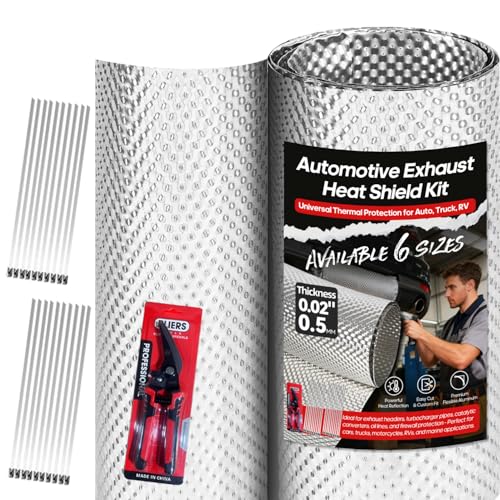
The Chocikick shield provides a long, flexible 16″ x 78.7″ solution with a 0.5 mm embossed aluminum sheet. It is designed to withstand up to 1022°F, making it well-suited to exhaust wraps, underbody components, and heat-sensitive areas near mufflers. The shield’s flexibility helps it conform to challenging contours, delivering thorough coverage without sacrificing airflow. The included design supports robust protection for critical parts such as fuel tanks and catalytic converters.
Key considerations:
- Coverage: long strip for extensive underbody protection.
- Flexibility: bendable to fit irregular routes.
- Performance: consistent heat resistance compatible with high-temperature exhaust systems.
AggSound 16″ x 13″ Aluminum Heat Shield (2 Pack)

AggSound offers a compact two-pack of 16″ x 13″ aluminum heat shields, each made from embossed aluminum with a 0.5 mm thickness. The package includes stainless steel zip ties for straightforward installation around exhaust components. This option suits tight spaces where shorter shields are needed to shield nearby lines, hoses, or rotating assemblies. The combination of light weight, corrosion resistance, and easy handling makes it a practical choice for targeted heat protection tasks.
Key considerations:
- Bundle: two shields per pack, increasing value for multi-point coverage.
- Installation: stainless steel zip ties simplify mounting.
- Size: smaller footprint ideal for restricted areas near wiring or hoses.
Buying Guide: How To Choose The Right Exhaust Heat Shield
- Heat resistance and materials: Look for embossed aluminum with 0.5 mm thickness for a balance of rigidity and flexibility. Many options list resistance up to 1022°F (550°C) or higher, which is suitable for mufflers, exhaust ducts, and underbody protection.
- Thickness and flexibility: A 0.5 mm shield offers robust protection while remaining formable to curved surfaces. For tight spaces, consider narrower widths or shorter lengths that still deliver adequate coverage.
- Sizing compatibility: Match shield dimensions to the area you intend to protect. Longer shields cover more area but may need trimming, while smaller shields fit tight corners near hoses, wiring, or fuel lines.
- Installation hardware: Some kits include cable ties or clamps. Ensure you have compatible fasteners for your vehicle’s underbody or chassis surfaces.
- Durability and insulation: Embossed aluminum shields typically offer better thermal resistance and durability than cloth-based shields. They resist moisture and denting, maintaining reflective properties over time.
- Installation ease: Shields that can be cut with tin snips and folded with simple tools save time. Clear instructions or pre-cut shapes for common exhaust configurations enhance install ease.
- Compatibility with existing components: Consider proximity to fuel tanks, catalytic converters, wiring, and hoses. Shields should reduce radiant heat without obstructing moving parts, emissions components, or sensors.
- Maintenance and longevity: Aluminum shields resist corrosion but may require occasional cleaning if exposed to road grime or salt. Check for warping after extended heat exposure or impact.
- Cost vs. coverage: Balance the shield’s size, thickness, and included hardware against your cooling needs and the protection level you require for critical components.
In practice, select shields that provide sufficient coverage for high-heat zones around the exhaust system while ensuring fitment with your vehicle’s layout. For larger engines or longer exhaust runs, multiple shields or longer strips offer consistent protection. For precision work in tight spaces, smaller shields paired with sturdy ties can deliver targeted heat management without bulk.