Finding the right fire extinguisher for a race car means prioritizing fast action, compact size, and clean agents that won’t damage high-end interiors or electronics. This guide highlights five top options designed for automotive use, focusing on Halotron-based “clean” extinguishers and reliable vehicle-specific models. Each pick blends performance with ease of use, ensuring quick response in a critical moment.
| Product | Brand | Volume | Agent |
|---|---|---|---|
| H3R HalGuard Mini Red | H3R Performance | 1.4 lbs | Halotron |
| H3R HalGuard Mini Chrome | H3R Performance | 1.4 lbs | Halotron |
| HalGuard Halotron 2.5 lbs | H3R Performance | 2.5 lbs | Halotron |
| Kidde Vehicle Fire Extinguisher 10BC | Kidde | Single-Use 10BC | ABC |
| Kidde Vehicle Fire Extinguisher 5BC | Kidde | Single-Use 5BC | BC |
Each option below is described with its core features, suitability for race car environments, and practical usage notes. Product details reflect the items in this guide and are intended to help buyers compare quickly.
H3R Performance HalGuard Mini Red – 1.4 Lbs

The HalGuard Mini Red from H3R Performance is a compact Halotron extinguisher designed for vehicle interiors, engine bays, and electronics. Its residue-free liquefied gas ensures no powder mess or corrosion, making it suitable for dashboards and high-end finishes. The design targets tight spaces and offers effective suppression up to about 8 feet, enabling fast response without obscuring visibility. This model prioritizes space-saving protection, ideal for race cars where quick access matters.
Key points: clean discharge, no mess, safe for sensitive components, and a compact footprint that fits into tight cockpit or trunk spaces. It is UL listed and designed for quick handling in emergencies.
H3R HalGuard Mini Chrome – 1.4 Lbs

This chrome version mirrors the red HalGuard Mini in function but adds a different aesthetic suitable for show cars or builds emphasizing a sleek, polished look. It uses Halotron to extinguish fires in confined spaces like dashboards, wiring, and engine bays. The compact size remains a strong suit, enabling quick deployment with minimal weight and no residue. It shares the same 8-foot range and space-saving design as other HalGuard minis, making it a practical race car safety upgrade.
Considerations include its elegant finish and the same clean-agent advantages—no powder, no mess—plus dependable reach within tight compartments where fires often start in performance vehicles.
HalGuard Halotron Fire Extinguisher – 2.5 Lbs
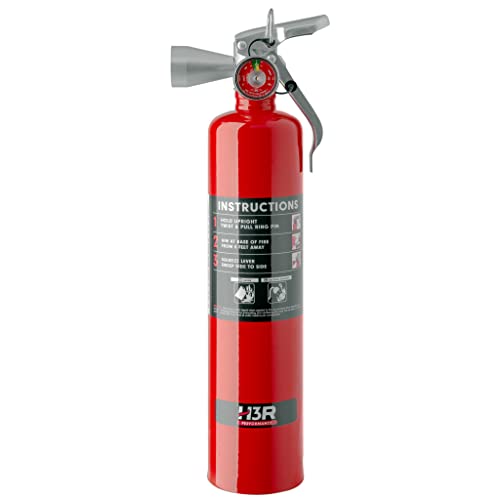
This HalGuard model offers increased fire-fighting power with a 2.5-pound capacity, still using Halotron for clean suppression. It features a slim profile that fits most vehicles while delivering stronger protection than smaller models. The range extends up to 10 feet, aiding quick responses during on-track incidents. Its design supports installation in engine bays and other high-risk zones without adding significant weight or bulk to the vehicle. The extinguisher remains easy to handle and accessible when seconds count.
Trade-offs include marginally larger size than minis, but the enhanced extinguisher mass translates to greater coverage in an emergency, particularly in race cars with more combustible materials or higher engine heat zones.
Kidde Vehicle Fire Extinguisher 10BC – Single-Use

The Kidde 10BC is a common choice for vehicle safety, offering reliable protection against flammable liquids and electrical fires. Built with an all-metal valve assembly and a durable handle, it supports straightforward operation in high-stress situations. The unit provides an 8–12 second discharge time and a 6–8 foot range, making it a practical option for quick on-track interventions. While not Halotron-based, its proven performance in automotive contexts keeps it in the race car safety mix.
Considerations include the limitations of dry chemical vs. clean-agent extinguishers, potential residue, and the importance of regular replacement or recharge cycles if used or past its shelf life. For race cars, mounting accessibility and visibility are practical planning factors.
Kidde Vehicle Fire Extinguisher 5BC – Single-Use

The 5BC model by Kidde provides compact protection with a 5BC rating, targeting common vehicle fire classes. It shares strong metal construction and a straightforward pull-pin mechanism for quick deployment. The smaller BC rating and single-use design suit smaller compartments or as a secondary extinguisher in addition to a Halotron primary unit. For racing applications, the 5BC unit offers redundancy and accessibility in tight cockpit spaces while maintaining a lightweight profile.
Key considerations include compatibility with the vehicle’s materials and potential cleanup from chemical agents, alongside the need to replace the unit after discharge or expiry, ensuring readiness for the next race or practice session.
Buying Guide: Key Purchase Considerations And Comparisons
- Agent type: Halotron-based extinguishers (clean agents) minimize residue and corrosion risk in interiors and electronics, which is crucial for modern race cars.
- Size and weight: Compact models fit in tight cockpits and trunks; larger ones offer more extinguishing power but take more space. Balance space with expected risk level in the vehicle.
- Discharge range and time: Longer reach and faster discharge can reduce damage during a fire. Halotron variants commonly provide 8–10 feet of range with rapid discharge times.
- Vehicle suitability: Some extinguishers are explicitly designed for vehicles, with mounting hardware and brackets included. Ensure compatibility with cockpit and engine bay layouts.
- Maintenance and replacement: Halotron units are typically reusable after recharge, while some smaller units are single-use. Plan for routine inspection and recharge intervals as part of race-day prep.
- Mounting and accessibility: Place extinguishers in locations that are easy to reach from the driver seat or within quick reach in the cockpit. Include mounting brackets if not already supplied.
- Compliance and safety: Check UL listings and manufacturer guidelines to ensure the extinguisher meets applicable safety standards for automotive use and racing events.
- Cost vs coverage: Higher-capacity units generally provide more protection but require more space. Consider a primary Halotron extinguisher for cockpit protection plus a secondary unit for other risk zones.
In racing scenarios, a combination approach—relying on a primary Halotron extinguisher for sensitive areas like the cockpit and electronics, with a secondary compact unit for quick access or additional coverage—offers robust safety without sacrificing space or performance. Regular checks, proper mounting, and awareness of each unit’s limitations help ensure readiness for on-track incidents.