Finding a reliable charging cable is essential for worry-free electric driving. This guide highlights five strong options that cover Level 1 and Level 2 charging, compatibility with SAE J1772, and practical features like adjustable current, timers, and durable builds. Each pick is evaluated on safety, versatility, and user convenience to help American drivers choose the right cable for home, travel, or on-the-go charging.
| Product | Brand | Key Feature |
|---|---|---|
| Raylix 16A Level 1 & 2 Charger | Raylix | Adjustable current; built-in display; wide compatibility |
| 12V/24V Car Charger 14AWG | Tonton | DC7909 to DC8020 compatibility; wide power station support |
| 2025 Upgraded Level 1 & 2 Charger | Raylix | 4-level current; smart delay timer; broad J1772 compatibility |
| ELEGRP Level 1/2 Charger | ELEGRP | PBE & LCR tech; IP67 weatherproof; 25 ft cable |
| EVDANCE Level 1&2 Charger | EVDANCE | Dual 16A/120V-240V; 25 ft cable; portable and versatile |
Raylix 16A Level 1 & 2 Charger
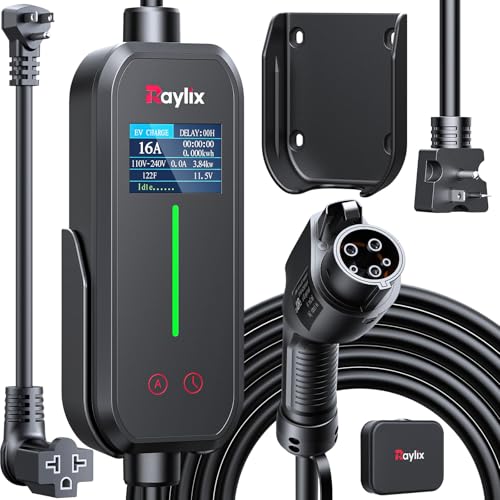
The Raylix Level 2 EV charger provides a built-in display to monitor status and settings at a glance. This user-friendly screen stands out in a crowded field by reducing reliance on vehicle information or apps. It supports multiple vehicles via SAE J1772 and adapts to 110V–240V outlets, making it flexible for home or travel use. An exclusive feature is its adjustable current (16A/12A) with a safety-limited mode when plugged into a 110V outlet. A delayed charging option helps you schedule off-peak charging.
Key benefits include broad vehicle compatibility, practical scheduling, and a clear interface. The 21 ft cable length offers ample reach, and the portable design makes it suitable for homes, garages, or guest charging. Safety protections and build quality are aligned with common consumer expectations for Level 2 charging equipment.
Ideal use scenarios include home nightly charging, hosting friends with multiple EVs, or traveling to locations with shared charging. For Tesla owners, a separate J1772 adapter can enable use with Tesla outlets if needed. The device is designed for straightforward setup and reliable day-to-day operation.
12V/24V Car Charger 14AWG (Tonton)

This charger emphasizes broad compatibility with power stations that use DC7909 to DC8020 connectors, broadening the use case beyond traditional home outlets. It’s particularly suitable for RVs, off-grid setups, and portable power stations from brands like Jackery, BLUETTI, and Goal Zero. The design includes emphasis on safe operation, with guidance against using it on uneven surfaces and after charging to protect both device and port.
The device supports multiple power station models and emphasizes versatility for travelers and campers who rely on portable power centers. It’s an accessory that complements a larger charging ecosystem, especially when the EV is charged through off-grid or portable power sources. Note the cautionary guidance regarding unplugging after charging and hot components to avoid damage.
2025 Upgraded Level 1&2 Portable EV Charger

This upgraded Raylix charger introduces precise current control and smart scheduling. It offers four current levels (8A, 10A, 12A, 16A) and a 1–12 hour delay timer, enabling efficient off-peak charging and energy savings. It’s compatible with all SAE J1772 EVs and PHEVs, making it a versatile option for households with multiple vehicle types. The charger promotes faster Level 2 charging (up to 4× faster than basic Level 1) to suit busy schedules.
Users gain the flexibility to charge at home or on the road, with scheduling to align with electricity pricing or routine. It supports common EV brands and can simplify family charging by accommodating different vehicles without swapping cables or adapters. The build emphasizes reliability and wide adoption in daily charging routines.
For Tesla drivers, a J1772-to-Tesla adapter (sold separately) can unlock compatibility, expanding the potential user base. As with other portable options, care should be taken to ensure a proper connection and outlet type before charging.
ELEGRP Level 1/2 EV Charger, 16 Amp

ELEGRP combines safety and durability with PBE and LCR tech to safeguard circuit integrity and improve charging stability. The Level 2 mode supports 16A at 240V via a NEMA 6-20 plug, while a 5-15 adapter provides 120V charging options. A 25 ft charging cable adds flexibility for garage layouts or outdoor setups, supported by rugged design built to endure frequent plug-in and unplug cycles.
The charger emphasizes indoor/outdoor use with weatherproofing (IP67-rated components) and a history of tested durability, backed by long-term use in households. Its temperature tolerance and protective features appeal to users prioritizing consistent performance through seasonal changes and everyday wear.
Practical considerations include whether you need frequent Level 1 travel charging or a regular Level 2 home station. The included carry bag enhances portability for vacations or work trips, where access to compatible outlets may vary.
EVDANCE Level 1&2 EV Charger

The EVDANCE portable charger supports both Level 1 and Level 2 charging with a 25 ft cable, offering flexibility for various outlets and situations. Its dual plug configuration—NEMA 6-20 for 240V charging and a 6-20 to 5-15 adapter for 120V charging—caters to different driving scenarios. Compatibility spans J1772 vehicles and hybrids, with the Tesla caveat requiring a compatible adapter for certain outlets.
Notable advantages include portability, long cable reach, and straightforward operation for everyday charging. The design targets users who value adaptability for home garages and temporary charging spots, such as office parking lots or hotels with limited amenities. When choosing, consider if you will frequently rely on 120V options or primarily use 240V charging for faster top-ups.
Buying Guide: Key Purchase Considerations
- Charging level and speed: Level 1 (120V) is slower but universally compatible; Level 2 (240V) delivers much faster charging. Look for adjustable current and smart scheduling to maximize efficiency.
- Connector compatibility: Ensure SAE J1772 support is included, with adapter options for vehicles like Tesla if needed. Confirm cable length suits your driveway, garage, or parking lot layout.
- Safety and build quality: PBE and LCR protections, weatherproof ratings (IP67 or IP66), and durable cables reduce wear and risk. Check for certifications (UL/ETL) and temperature tolerance for year-round use.
- Smart features: Built-in displays, Wi‑Fi connectivity, mobile apps, and remote monitoring help manage charging costs and track consumption.
- Portability vs. fixed installation: Portable chargers suit travelers and apartment dwellers, while fixed wall-mounted units can offer permanent convenience and integrated safety features.
- Cable length and storage: A 20–25 ft length balances reach with weight. Consider a carry bag or wall-mount holder for organization and protection when not in use.
- Power sources and outlets: Verify your home electrical capacity and the receptacles (5-15, 6-20, or 14-50) supported by the charger. Off-peak scheduling can help manage demand charges.
This selection targets reliability, compatibility across common EV models, and practical features that matter in everyday scenarios—from home charging to travel-friendly setups. When evaluating options, compare current capabilities, scheduling options, and safety features to align with your vehicle and living situation.