Choosing the right battery wires can improve power delivery, reduce voltage drop, and simplify auto electrical installations. This guide features five top-rated cables suitable for car audio, amps, ground wiring, and auxiliary power. Each option balances conductor material, gauge, jacket flexibility, and ease of use to fit common automotive setups. Compare features, pairing options, and installation considerations to find wires that meet your power needs without compromising reliability.
| Product | Gauge / Length | Best For |
|---|---|---|
| GEARit 8 Gauge Wire | 8 AWG, 25 ft (Black/Red) | Power/ground runs for car audio and light-duty installs |
| CARTMAN 4AWG 24-Inch Battery Cables | 4 AWG, 24″ (1 Positive & 1 Negative) | Heavy-duty amp power and short engine bay runs |
| InstallGear 4 Gauge Wire | 4 AWG, 50 ft | Longer power/ground runs for amps and ground loops |
| GEARit 4 Gauge Wire | 4 AWG, 25 ft | Automotive power/ground with flexible jacket |
| Mygatti 10 Gauge Wire | 10 AWG, 25 ft | Low-voltage wiring, subwoofers, and general automotive lighting |
GEARit 8 Gauge Wire For Power And Ground

The GEARit 8 Gauge Wire provides a copper-clad aluminum (CCA) conductor, offering economical power transfer for automotive and RV projects. It is marketed as a power/ground set suitable for car amplifiers, subwoofers, and ground runs. The soft-touch PVC jacket enhances handling during installs and protects the conductor in indoor or shop environments. This wire is designed for flexible routing around tight spaces under the hood and in various automotive applications, while remaining cost-effective for budget-conscious builds.
CARTMAN 4AWG 24-Inch Battery Cables
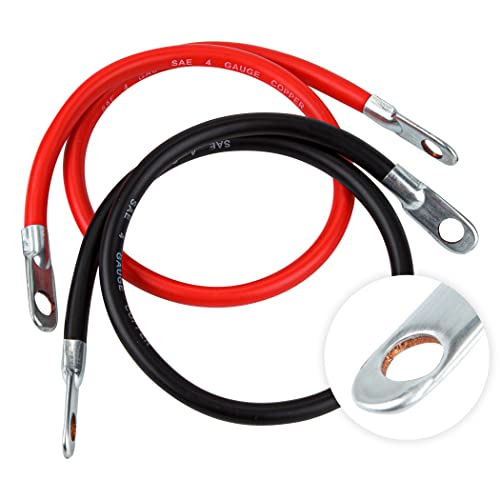
This CARTMAN set includes 4 AWG copper lugs and heavy-duty copper conductors with zinc-plated lugs to resist corrosion. The 24-inch length provides a compact option for close-engine-bay installs, battery-to-amp connections, and medium-distance power runs. The emphasis is on robust construction and oxidation resistance, making it suitable for car, truck, RV, and solar-related wiring where a compact positive and negative pair is needed.
InstallGear 4 Gauge Wire

InstallGear offers a 50-foot spool of 4 AWG CCA battery cable designed for automotive power and ground applications. It emphasizes true-to-gauge sizing for reliable current transfer and flexibility for routing through cramped engine compartments. The soft-touch PVC jacket provides durability under heat, oil, and abrasion while maintaining ease of bending for tight installations.
GEARit 4 Gauge Wire — Flexible CCA Extension

This GE ARit cable uses copper-clad aluminum for a balance of cost and conductivity. It is intended for power and ground runs in automotive installs, including car audio and RV wiring. The soft-touch jacket is designed to tolerate frequent handling, while the 25-foot length offers flexibility for longer routes under the hood or through compartments with limited space. The product highlights emphasize strong power transfer and ease of installation in automotive contexts.
Mygatti 10 Gauge Wire For Low-Voltage Wiring

Mygatti supplies 10 AWG CCA battery cable with translucent jacket for easy color-coding. It includes heat shrink tubing to facilitate secure terminations and offers a flexible, low-voltage option appropriate for car audio power runs, ground wiring, or auxiliary lighting. The product emphasizes ease of differentiation and routing in difficult-to-reach areas, while maintaining a budget-friendly profile.
Buying Guide: Key Purchase Considerations For Battery Wires
- Conductor Type: CCA vs. OFC. Copper-clad aluminum (CCA) is economical and lighter, suitable for many automotive installations. For maximum current handling and longevity, pure copper (OFC) wires are preferred, though they cost more.
- Gauge And Length: Lower gauge numbers (e.g., 1/0, 0, 4, 8) carry more current but are stiffer. Choose gauge based on current draw, distance, and allowable voltage drop. Longer runs require thicker gauge or parallel wires.
- Jacket Material: A rugged PVC jacket provides abrasion resistance, heat tolerance, and flexibility. Soft-touch jackets offer easier routing in tight engine bays and under dash areas.
- Terminations and Lugs: Lugs should be corrosion-resistant (e.g., plated copper) and fit the terminal size. Proper crimping and heat shrink insulation enhance safety and reliability.
- Environmental Suitability: Consider resistance to oil, heat, moisture, and vibrations typical of under-hood environments. Marine and RV setups may require additional moisture protection and flexibility.
- Flexibility and Handling: A jacket that remains flexible at lower temperatures helps during stubborn routing. Look for low-memory jackets that stay pliable when bent around components.
- Color Coding: Red and black conductors help differentiate positive and negative paths, reducing installation errors and aiding troubleshooting.
- Application Fit: Ensure the wire gauge and length match your specific use case—car amplifiers, grounding, solar setups, or marine wiring often have distinct requirements.
When selecting battery wires, balance cost, current requirements, and installation practicality. For high-power car audio or heavy loads, pairing a thicker gauge (like 4 AWG or 1/0) with high-quality lugs and heat-shrink terminations usually yields the most reliable performance. For simple ground runs or low-amp circuits, lighter gauges with flexible jackets can reduce weight and ease routing without compromising safety.