The market for car heads-up displays (HUD) and GPS speedometers continues to grow, offering clearer readings, safer driving, and easy plug-and-play setup. This guide highlights five reliable HUD speedometers that combine GPS accuracy, bright displays, and simple installations. Each product focuses on visibility, live speed data, and compatibility with a wide range of vehicles.
Summary of chosen products
| Product | Brand | Display Size | Key Benefit | Fit For |
|---|---|---|---|---|
| Heads up Display for Cars, K1-White | KUOWEIHUD | Large | Automatic brightness, GPS+BDS dual-mode | Cars, motorcycles, trucks |
| Heads up Display for Cars, Large Font | KUOWEIHUD | Large | Plug-and-play USB, 32 satellites | All USB-equipped vehicles |
| SinoTrack Digital GPS Speedometer | SinoTrack | 5.5 in | Over-speed and fatigue alerts | All vehicles |
| wiiyii OBD2 Gauge Display P6 | wiiyii | HUD with OBD2 interface | Multiple data points: speed, RPM, temp | Most cars |
| Docbraces G20 HUD Speedometer | Docbraces | 3 in screen | Universal USB plug-and-play | All vehicles |
KUOWEIHUD K1-White GPS HUD Speedometer
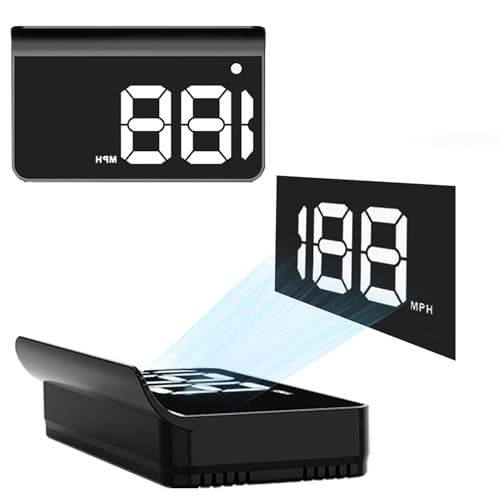
The K1-White HUD from KUOWEIHUD combines dual-mode GPS+BDS signal reception with a high 10 Hz update rate. This enables rapid and accurate speed readings across urban canyons and open highways, with support for up to 32 satellites. Automatic brightness adjustment uses ambient light sensors to ensure legible data in daylight and at night, reducing driver eye strain. The unit is designed for universal USB-port vehicles, making installation straightforward for cars, motorcycles, and trucks. The large font display enhances readability at a glance, helping drivers keep their eyes on the road.
KUOWEIHUD Large Font USB HUD Speedometer

This KUOWEIHUD model emphasizes a large font display with plug-and-play USB setup. It shares the same reliable GPS+BDS dual-mode reception and 10 Hz refresh rate, enabling quick, stable speed readings in diverse driving environments. Automatic brightness adjustment maintains clear visibility under bright sun or dim nighttime conditions. Its USB port compatibility supports almost any vehicle with a standard USB outlet, including cars, motorcycles, and trucks, making it a flexible option for fleets and personal use alike.
SinoTrack 5.5 Inch GPS HUD Speedometer

The SinoTrack HUD features a prominent 5.5-inch display that shows speed alongside driving time, mileage, direction, and satellite status. It includes fatigue and overspeed alerts to support safer driving, with an automatic light-sensing screen that adjusts brightness for daytime and nighttime visibility. The device presents essential data in a concise layout, reducing driver distraction while keeping critical metrics in easy reach. It is designed for universal compatibility across vehicles, offering a practical balance of visibility, safety features, and reliability.
wiiyii OBD2 HUD Gauge Display P6
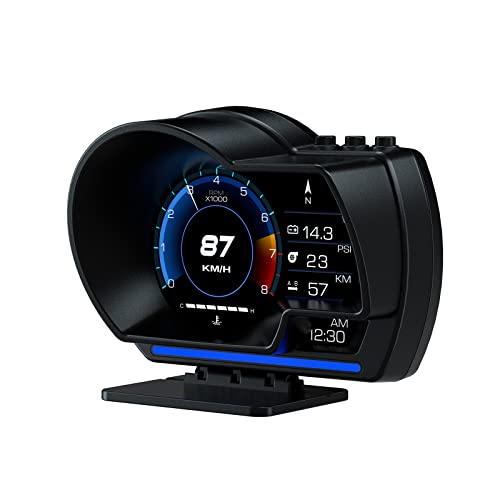
The wiiyii P6 model pairs OBD2 data with GPS for an integrated gauge dashboard. It displays speed, RPM, water temperature, and other engine metrics, delivering a comprehensive at-a-glance view. The unit emphasizes safety with clear, glare-free digits and a range of install options, including dashboard mounting or windshield attachment. Energy-efficient operation and an auto-shutoff feature help conserve power when the vehicle is idle, while a bright, legible display remains visible across lighting conditions.
Docbraces G20 GPS HUD Speedometer

The Docbraces G20 HUD offers a universal, plug-and-play solution with a 3-inch screen. It presents real-time speed data alongside compass readings and speeding warnings, helping drivers maintain appropriate speeds. Its USB connection makes installation quick for a wide array of vehicles, from compact cars to larger trucks. The device prioritizes readability and ease of use, delivering reliable speed information without requiring complex vehicle integration or recalibration.
Buying Guide: key purchase considerations
- Display size and readability: Larger displays with high contrast improve at-a-glance speed checks. Consider a model with adjustable brightness to reduce glare in bright sun or at night.
- GPS vs. OBD2 integration: GPS HUDs rely on satellite data for speed, while OBD2-enabled units pull data directly from the vehicle’s computer. If you want broader data (RPM, temps, etc.), an OBD2-enabled model may be preferable.
- Attentiveness and safety features: Look for overspeed alerts, fatigue reminders, and multiple alarm levels. These features help promote safer driving habits without distracting from the road.
- Power and installation: USB plug-and-play designs are the easiest for most vehicles. Verify compatibility with your car’s USB ports and mounting flexibility (dashboard vs. windshield).
- Signal reliability: Dual-mode GPS+BDS or GPS-only receivers improve accuracy in urban canyons or rural zones. A high refresh rate (10 Hz or higher) reduces lag in speed display.
- Durability and visibility under various conditions: Weatherproofing and glare resistance extend the device life and usability in different climates and lighting conditions.
- Multi-vehicle versatility: If you own several vehicles, prioritize models that work across cars, trucks, motorcycles, and even boats or golf carts where applicable.
- Data depth: Some HUDs provide directional data, driving time, mileage, compass, and satellite status. Decide how much information you want visible at a glance.
When comparing models, consider how the features align with your daily driving needs. For city commuting, a clear, bright display with automatic brightness and reliable GPS reception can significantly reduce distraction. For longer road trips or fleet use, a device offering additional data points (RPM, speed, engine temps) can be a valuable diagnostic aid. Finally, ensure the installation process fits your vehicle type and your preferred mounting style to maximize both usability and safety.