When upgrading a car audio system, choosing a capable 5000-watt amplifier can unlock stadium-level bass and clean, high-volume output. This guide highlights five top-rated 5000-watt car amplifiers, with quick specs, features, and buying considerations to help you compare performance, durability, and value.
| Product | Brand | Approx. Power Type | Key Feature |
|---|---|---|---|
| BOSS PD5000 Phantom | BOSS Audio Systems | 1 Ohm Stable Monoblock | 1 channel at 5000 W peak |
| Power Acoustik OD1-5000D | Power Acoustik | 1 Ohm Stable Mono | 2000 W RMS to subs; versatile protection |
| Taramps MD 5000.1 | Taramp’s | 1 Channel Full Range | 5000 W RMS at 2 ohms |
| AUDIOTEK AT5000S | AUDIOTEK | 2 Ohm Stable Stereo/Bridgeable | 5,000 W total, bass control included |
| Audio360 AD5000.1 | Audiobank | 1 Ohm Stable Mono | 400–1000 W RMS, strong bass |
The selections below emphasize power, reliability, and compatibility across common subwoofers and speaker configurations. Each entry includes a concise summary of what makes it suitable for demanding car audio setups, plus practical considerations for installation and long-term use.
BOSS PD5000 Phantom 5000-Watt Amplifier

The BOSS PD5000 Phantom is a Class D monoblock amplifier designed for high-power subwoofer systems. It delivers up to 5000 W MAX Power at 1 Ohm, 2500 W at 2 Ohms, and 1250 W at 4 Ohms, making it a robust option for deep bass without excessive heat when properly ventilated. Its stability at 1 Ohm supports demanding sub configurations, and the remote subwoofer control bridge enhances tuning flexibility for altered listening environments. The device is suited for those who want significant bass impact with straightforward installation in standard car audio builds.
Power Acoustik OD1-5000D Overdrive Series
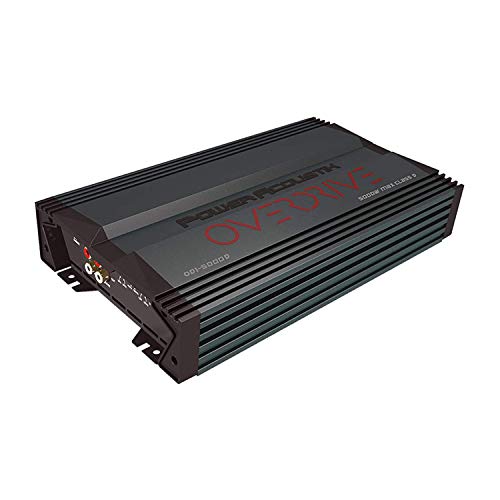
The OD1-5000D is a high-powered 5000-watt mono amplifier designed for 1 Ohm stability and dual-input flexibility. It feeds a single channel with up to 5000 watts max, and you can double capacity by strapping two units for higher output. Its PWM MOSFET power supply and military-grade PCB construction emphasize reliability for intense bass tasks. The unit includes protection circuits against short, thermal, and overload conditions, which is essential for long peak-demand sessions on subwoofers tuned for sub-30 Hz output. This model is ideal for users who want extreme power with sturdy protection and expandability.
Taramp’s MD 5000.1 Monoblock

The Taramps MD 5000.1 is a full-range monoblock amplifier delivering 5000 Watts RMS, engineered for 2 Ohms operation and robust bass performance. Its 10 Hz – 10 kHz frequency response supports subwoofers, mid-bass, and vocal ranges while maintaining clarity. As a 1-channel device, it aims to maximize low-frequency output with efficient Class D design and minimal heat buildup when paired with an appropriately ventilated enclosure. This model suits users seeking a high-power, compact solution for a single-subwoofer-centric system.
AUDIOTEK AT5000S 2-Channel Mono/Bridgeable

The AUDIOTEK AT5000S provides a 2-channel stereo option with 5,000 watts total output and 2 Ohm stability. It features a tri-mode capable design, a heavy-duty aluminum heat sink, and a remote subwoofer control for on-the-fly bass tuning. Bridgeable operation allows configuring for more than one sub or speaker pair if needed. Its combination of protection features and a flexible crossover range makes it a versatile choice for mixed systems where both bass and mid-range output are important. This model appeals to buyers who want bridgeable power with practical bass management tools.
Audio360 AD5000.1 Monoblock

The Audio360 AD5000.1 is a compact 5000 W max power monoblock, designed for 1 Ohm stability. It emphasizes a balance of high output and efficiency in a smaller footprint, suitable for tight installation spaces in vehicles with larger subwoofer arrays. The 1 Ohm operation supports rugged bass performance, and users can expect clean, punchy lows with careful tuning and proper ventilation. This option suits builds where space is constrained but high power is still demanded.
Buying Guide
- Impedance and stability: Ensure the amplifier is stable at the impedance your subwoofers require (1 Ohm, 2 Ohms, etc.). Higher damping and stability improve control over cone movement and reduce distortion at high volume.
- Power handling: Match the amplifier’s RMS power ratings to your subwoofers. Peak ratings are less relevant for long-term performance; RMS figures better reflect real-world output.
- Class and efficiency: Class D amps generally run cooler and more efficient at high power, making them popular for sub-heavy systems. Consider the heat management and ventilation in your install.
- Protection features: Look for thermal, short-circuit, and overload protections. These help prevent damage during peak bursts and amplifier stress.
- Input/output options: Check RCA inputs, speaker-level compatibility, and any remote bass control features. These influence ease of integration with existing head units and subwoofers.
- Size and mounting: Powerful amps can be large. Verify dimensions and mounting clearance in your vehicle to avoid fitment issues.
- Wiring requirements: High-power setups usually require heavy-gauge power and ground wires (often 4 AWG or 0 AWG). Plan for proper fusing and a reliable distribution path.
- System compatibility: Consider whether you need mono (sub-focused) or bridgable stereo configurations, and how the amp will interact with your current speakers and subwoofers.
- Sound goals and room tuning: High-powered amps enable louder playback, but achieving clean, distortion-free bass also depends on enclosure design, subwoofer choice, and proper crossovers.
Across these options, buyers should evaluate installation space, power needs, and the intended subwoofer configuration. A well-matched amplifier contributes to sustained performance and reduced risk of overheating or component strain. For most users, pairing a 5000-watt class D mono amp with a high-quality 12″ or 15″ subwoofer in a properly vented enclosure offers a strong balance of bass authority and reliability, while a bridgeable amplifier can support multi-sub setups where space and wiring permit.